
Resale sourcing, styles that sell, and the story-first way to title + photograph them on Etsy (with Sale Samurai)
A great ceramic line doesn’t start with a factory order—it starts with the find: a thrift-store mug that feels right in the hand, a flea-market vase that catches light like it remembers its old room. Small-batch ceramics convert on Etsy when your shop reads like a curated gallery: edited pieces, grouped with intention, titled in the words buyers actually type. Sale Samurai’s role is simple—confirm the language and surface the winnable long-tails.
Three sourcing paths that all work
1) Secondhand hunter
Thrift, estate, church rummage, flea rows, house clear-outs. You’re buying voice, not volume—sets of speckled stoneware mugs, a pair of fat-lava vases, blue transferware stacks.
2) Market/wholesale curator
Dealer relationships let you build a themed drop fast—buy a tray of smalls, negotiate a shelf’s worth, and stand up a cohesive collection in a weekend.
3) Contracted small-batch from an artist
Once your resale line has a “signature,” commission limited runs that harmonize: tumblers in your palette, planters in your favorite sizes, tapas bowls that pair with mid-century platters. Vintage stays the backbone; collabs become highlights.
Forms that reliably sell
You can sell anything once. Consistency comes from forms that solve routines and gifts:
Mugs (and cousins)
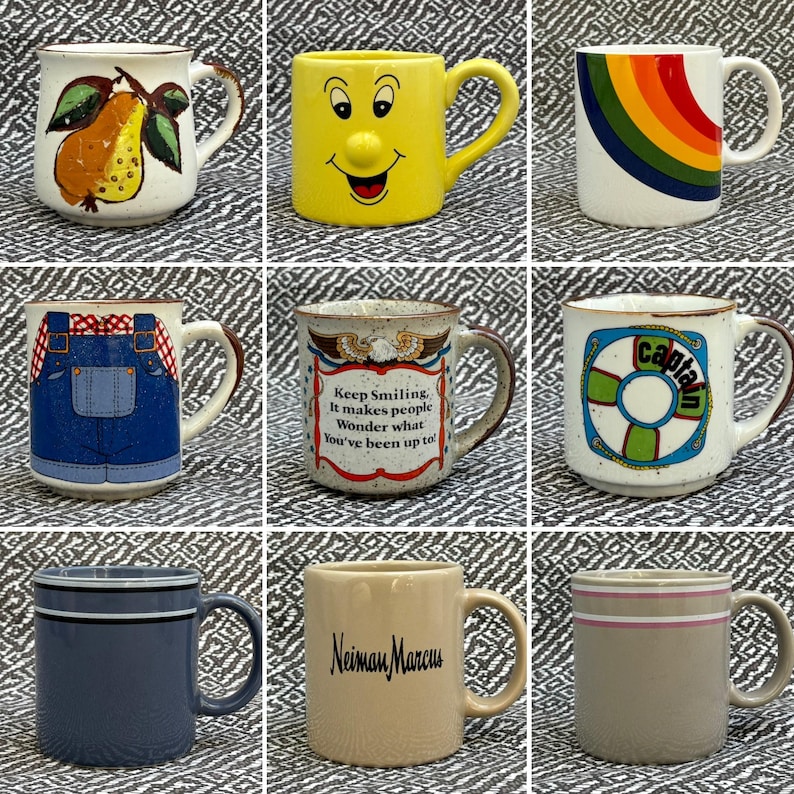
Stoneware in speckled oatmeal, ash white, warm iron glazes. Studio handles with thumb rests. Restaurantware (Shenango, Homer Laughlin, Syracuse) sells for “built to last” vibes. Sets of 2/4 bundle well; strong singles become hero listings.
Bowls + serving
Ramen/soup bowls, mixing bowls, tenmoku salad bowls, geometric transfer platters. Small bowls move best in sets (3–5).
Planters + cachepots
A perennial category. If there’s no drainage, list as cachepot and say so—bigger buyer pool.
Vases + bud vases
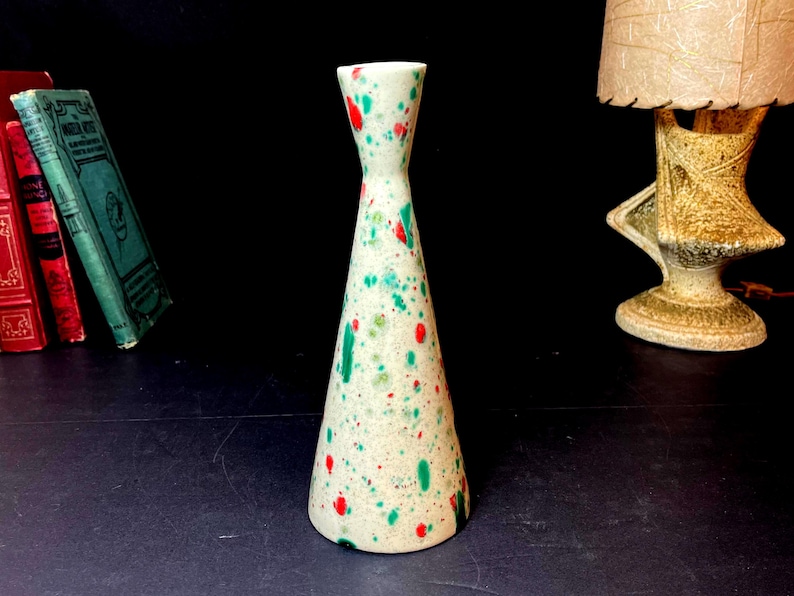
One-stem bud vases are easy wins. Ikebana bowls (with or without frog) move fast. Pitchers that double as vases = two use-cases in one listing.
Pitchers + jugs
Photogenic, giftable, nostalgic. Ironstone, confit shapes, creamers—always useful.
Lamp bases
MCM drip glaze, brutalist textures, Bitossi-style forms—niche but anchoring. Disclose rewiring status clearly.
Tiles, trivets, wall plates
High CTR, lower shipping weight. Great “accent” items buyers impulse-favorite.
Styles and glaze stories with staying power
Rotate “set list” styles so returning buyers always see a favorite:
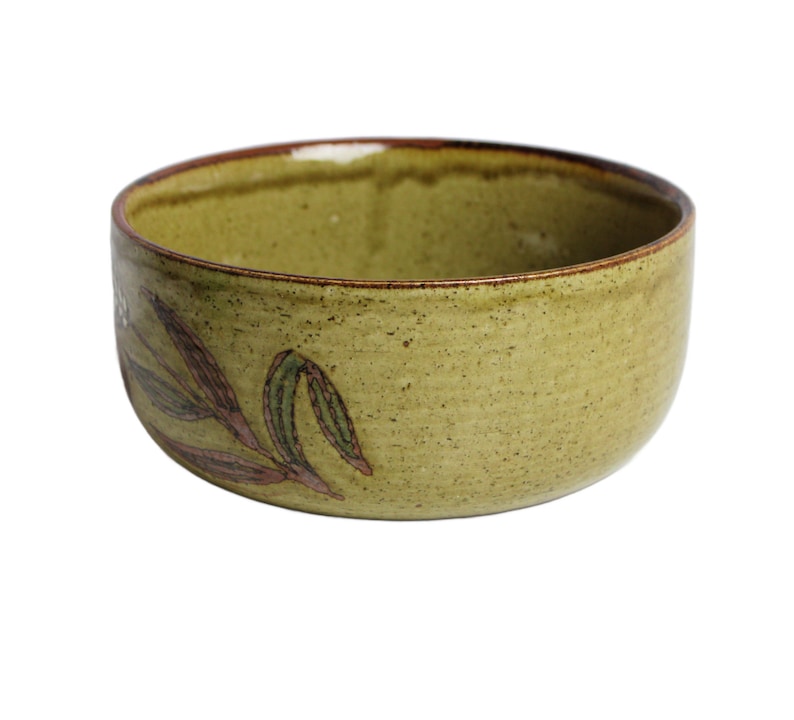
- Studio pottery (1960s–80s): shino/ash, iron speckles, carved slip. Show thumb rests, rim breaks, foot rings.
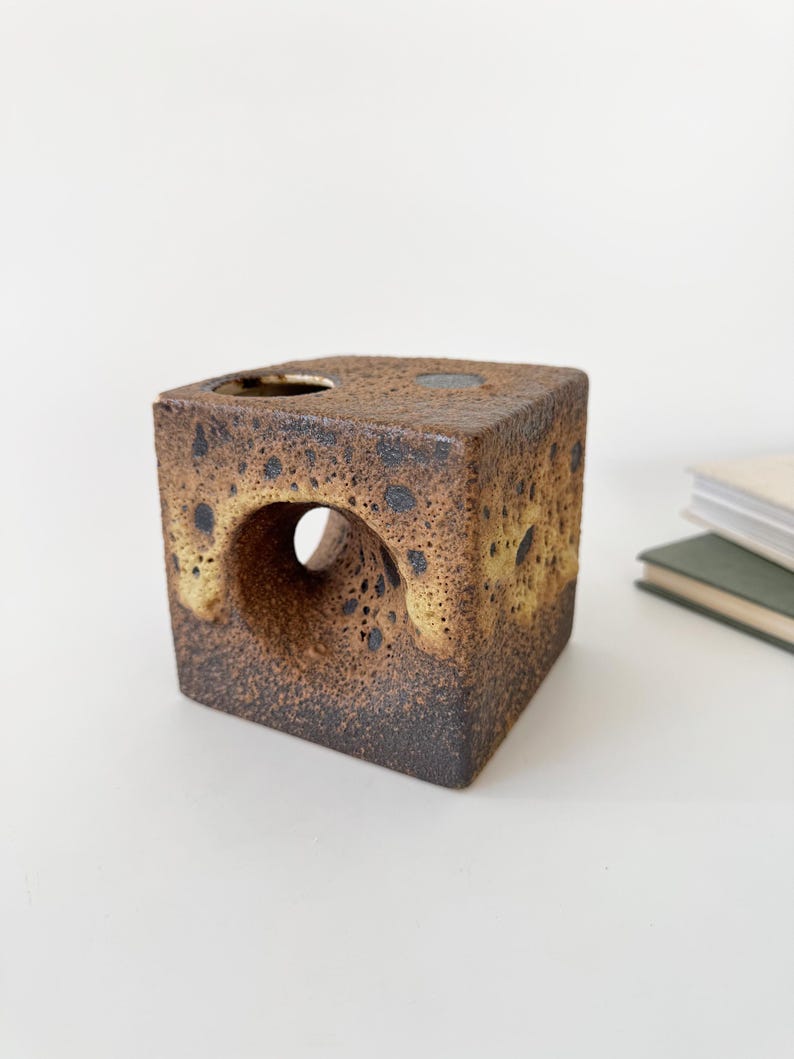
- West German Fat Lava (1950s–70s): craters, drips, stacked handles. “Fat lava vase” is a search magnet.
- Italian Bitossi + companions: Rimini Blue textures, earthy 60s/70s palettes. Use “Bitossi style” when unmarked.
- Scandinavian calm: matte whites, clean forms, minimal florals—photographs beautifully.
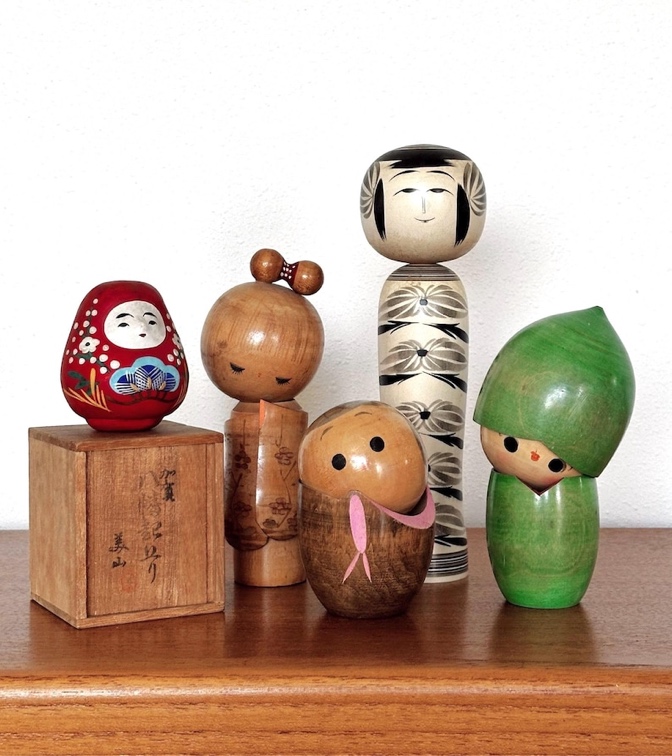
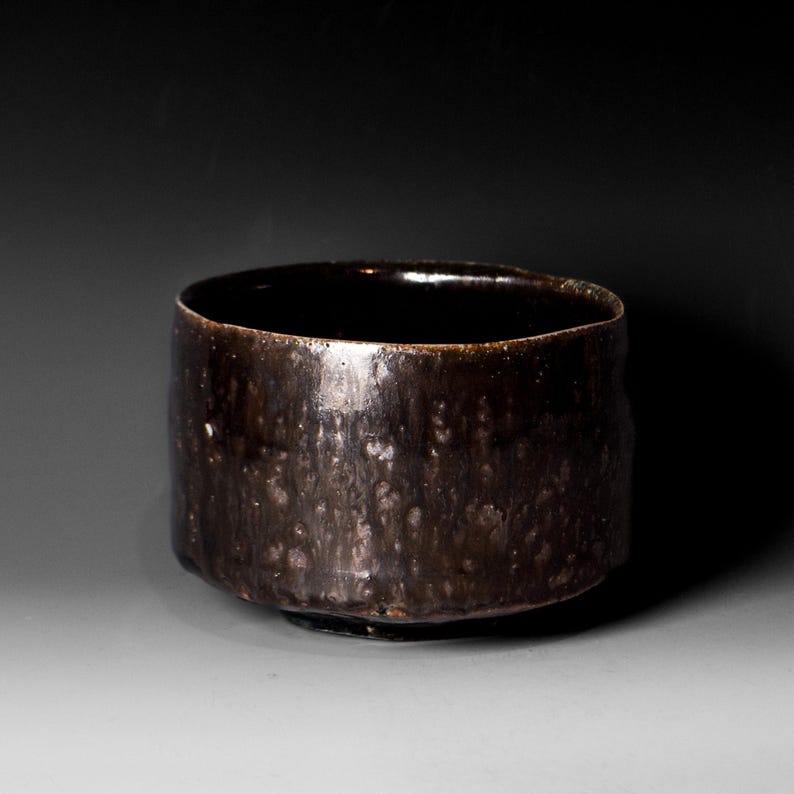
- Japanese folk craft + studio: tenmoku, celadon, oribe greens, yakishime unglazed. Buyers often search glaze first.
- English ironstone + transferware: loyal audiences; “ironstone” and “transferware” are category cues.
- 90s/early-00s restaurantware: durable daily sets are back; “built to last” sells.
Curate as drops, not random singles
Instead of trickling listings, build 8–24 piece themed drops:
- “Speckled & Oatmeal” (mugs, bowls, candleholders)
- “Rimini & Friends” (blue textures + Italian companions)
- “Blue & White Pantry” (ironstone + transferware + tiles)
- “Glaze Volcanoes” (fat lava + drip + brutalist lamps)
Drops create momentum in your storefront grid and make promotion easier.
Titles and tags in the buyer’s language
Buyers don’t type “midcentury glaze expression.” They type fat lava vase, speckled stoneware mug, ironstone pitcher.
Title examples:
- “Fat Lava Vase – West German, Volcanic Glaze, 1960s”
- “Speckled Stoneware Mug (14 oz) – 1970s Studio Pottery”
- “Ironstone Pitcher – English Transferware Jug”
- “Tenmoku Bowl – Gloss Black/Brown Stoneware”
- “Cachepot Planter – Mid-Century Ceramic, No Drainage”
Sale Samurai workflow (light):
Confirm the main phrase, then grab 2–4 long-tail variants with friendlier competition (e.g., west german fat lava vase, ironstone water pitcher, speckled pottery mug). Lead the title with one phrase; let the rest live in tags.
Tags should cover: form + material + era + style + color + use-case without repeating the title 13 ways (think: studio pottery, stoneware mug, speckled glaze, west german, fat lava, transferware blue, celadon, tenmoku, cachepot, no drainage).
Photos that translate “handfeel”
Upcycled/vintage ceramics sell when your photos answer silent questions fast.
- Hero: neutral background, soft daylight, 45° angle
- Scale: in-hand or next to book/fruit; include dimensions + capacity for mugs
- Glaze macro: texture, pooling, lava craters, speckle
- Foot + mark: turn it over; “unmarked—see photo” builds trust
- Group shot: the drop together (cousins, not clones)
- Video: slow turn in window light—huge for drip/lava and satin vs gloss finishes
Photograph flaws honestly (crazing, flea bites, glaze pops). Circle once, describe calmly. Buyers forgive truth; they punish surprises.
Bundles that lift AOV
Ceramics love company:
- breakfast set: 2 mugs + small bowl + pitcher
- planter trio: graduating cachepots matched by tone
- blue & white table: plates + platter + tile trivet
Title bundles like solved problems and include each piece’s dimensions.
If you commission an artist, keep it in-family
Collabs win when they echo your vintage voice: speckled mugs in 12–14 oz, matte white planters with saucers, celadon bud vases that sit beside your vintage pieces. Name the run and control restock rhythm (edition of 24, etc.). Vintage stays the backbone; collab is the “event.”
The point
A converting ceramic shop is curated, not crowded. Lead with what buyers type, photograph like you’re proving weight and texture, and release small batches with rhythm. Let Sale Samurai confirm phrasing and reveal long-tails; you handle the taste.
Open the doors. Name the drop. Let the glaze do the talking.