If you’ve ever had a listing that gets views, clicks, even favorites… and then mysteriously refuses to convert, you’ve encountered the trust gap.
The trust gap is the space between:
- “I like this”
and - “I’m willing to pay for this.”
On Etsy, closing that gap is often more important than adding new products. Because your issue might not be demand.
Your issue might be confidence.
And the frustrating part? The trust gap often shows up exactly when you’re doing something right. Your listing is good enough to attract attention. People are interested. They’re pausing. They’re even favoriting.
But they’re not crossing the final line.
That moment isn’t random. It usually means one thing: the buyer is still holding a small fear.
Not a dramatic fear. A quiet one. The kind of fear that sounds like:
- “This might not look like the photos.”
- “I’m not 100% sure what I’m getting.”
- “What if I buy it and it’s a hassle?”
- “Is this seller reliable?”
- “Do I trust this enough to spend money?”
That’s what you’re really fighting.
So let’s break down what creates the trust gap—and how to fix it without rewriting your entire shop.
A quick story: how buyers behave when they’re on the fence
Picture a buyer scrolling Etsy at night, half tired, half hopeful. They’ve got a mental mission:
- find something cute
- find something useful
- find something that feels personal
- don’t waste money
- don’t get burned
They click your listing. They like it. Maybe they favorite it.
Then they pause.
If they can’t answer one simple question—“Will I be happy when this arrives?”—they back out.
Not because they hate your product: because Etsy is a marketplace of risk.
And the easiest risk management strategy on the internet is: don’t buy yet.
That’s why clicks are common and purchases are rare. Purchases require confidence.
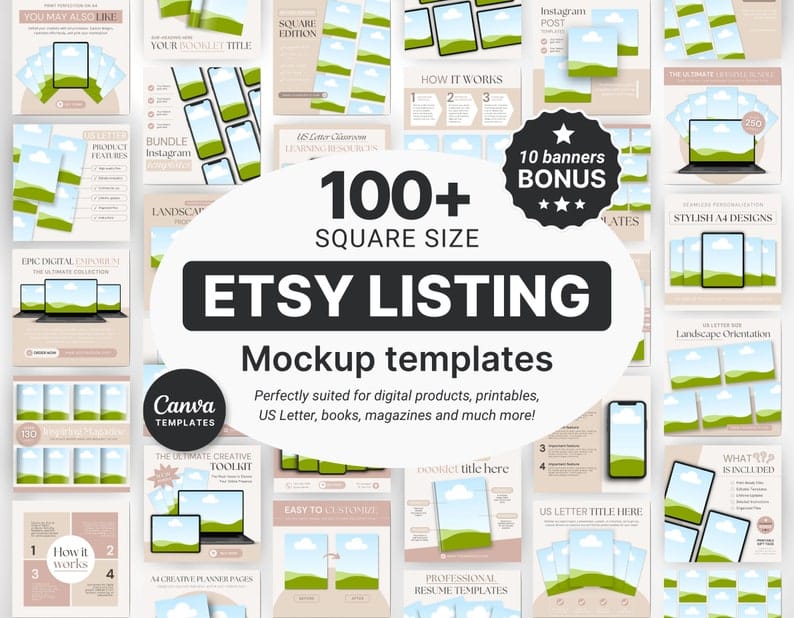
The 5 most common trust gaps on Etsy
1) The buyer isn’t sure what they’re getting
Especially with digital products, confusion kills conversion. Buyers need clarity:
- file type
- size
- how it’s used
- what’s included
If they’re unsure, they bounce.
Here’s the key thing to remember: buyers don’t want to do homework. They want to buy, feel smart about it, and move on with their life.
If a buyer has to interpret:
- “Is this editable?”
- “Is this a printable or a physical item?”
- “How many pages do I get?”
- “What size is it?”
- “Does this print at home?”
…they hesitate.
And hesitation is the enemy of conversion.
Fix it with a “what you get” section that’s impossible to misunderstand.
Even one clean bullet list can close the gap.
2) The visuals don’t match the promise
Your title says “minimalist,” but the preview is busy. Your mockup looks premium, but the file preview looks rough. The vibe mismatch creates doubt.
This one is brutal because it can happen even when your product is good.
If your listing’s first image promises “clean and modern,” but the preview pages look cluttered, the buyer feels tricked—even if you didn’t mean to trick them.
Trust is fragile. Visual mismatch breaks it instantly.
A good rule: Your first image and your file preview should look like they come from the same universe.
If your mockup looks like a boutique brand and your actual downloadable pages look like a rushed PDF, the buyer’s brain says: “Uh oh.”
And they bounce.
3) The shop feels inconsistent
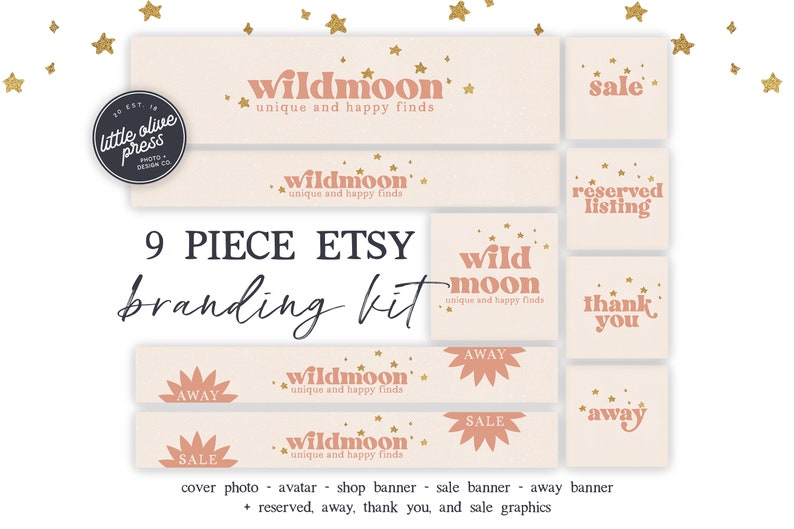
If your shop looks like 5 aesthetics competing, buyers worry:
- “Is this seller legit?”
- “Is this quality consistent?”
Coherence builds trust.
Think of Etsy like walking into a store in the real world. If a boutique feels curated, you trust it.
If it feels like a flea market, you browse… but you hesitate to buy.
A lot of Etsy shops accidentally become flea markets because sellers chase:
- multiple trends
- multiple niches
- multiple aesthetics
all at once.
And again: that’s not a moral issue. That’s a clarity issue. Buyers trust shops that feel like they have a point of view.
If you want to close the trust gap, pick a lane for a while:
- one aesthetic system
- one niche spine
- one product family
Then the shop starts feeling consistent, and buyers relax.
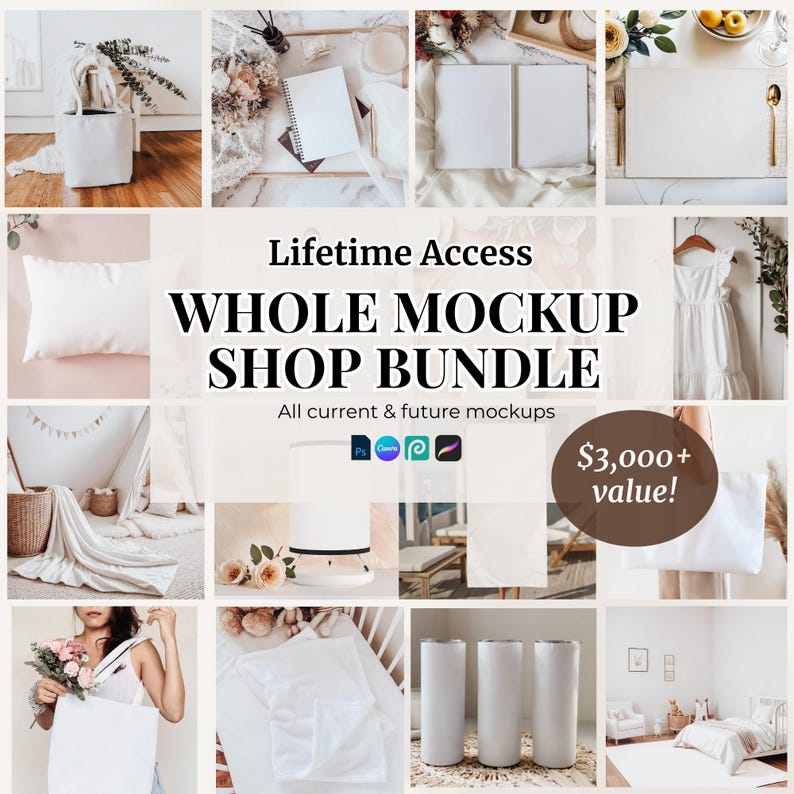
4) There’s no “proof of use”
A lot of products need context:
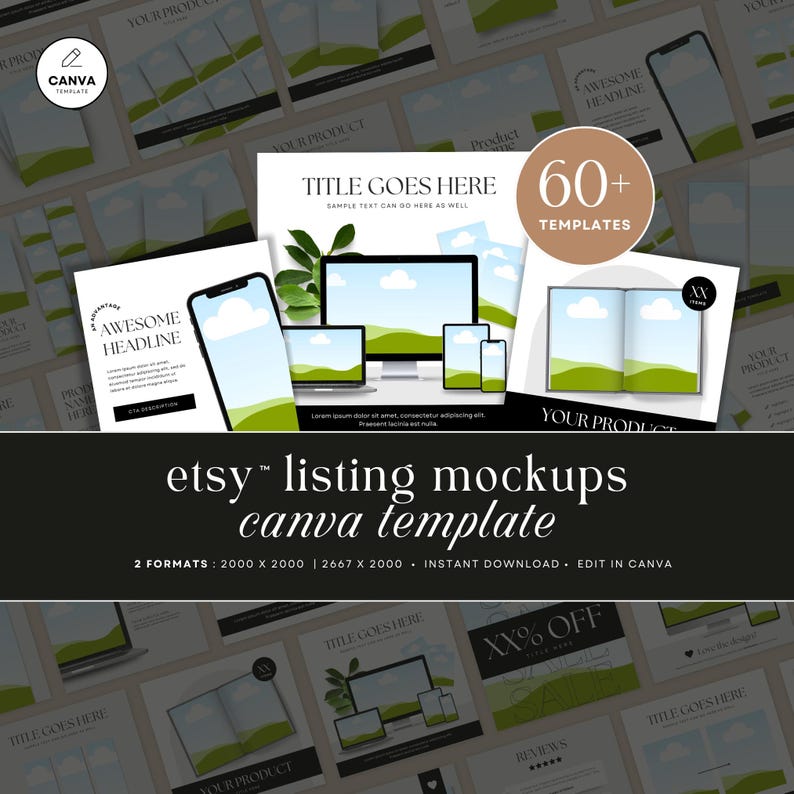
- printables need mockups in real spaces
- shirts need scale
- bundles need clear previews
If buyers can’t imagine the product in their life, they don’t buy. This is the “floating PDF” problem.
If the buyer sees a printable as a flat white page, they think:
- “Okay… but how does this look when it’s actually used?”
Your job is to show the product living its real life:
- framed on a wall
- clipped to a clipboard
- in a binder
- on a kitchen counter
- on a teacher’s desk
- on a phone screen if it’s a digital template
Proof of use is proof of competence.
It tells the buyer: “This seller understands how this product will be used.” And that’s a trust builder.
5) The listing language feels generic
Generic copy feels like:
- low effort
- high risk
- “maybe the file is sloppy”
Warm, specific language feels trustworthy.
This one surprises people, but it matters a lot.
When a buyer reads a description that sounds like it was copied from a template, they assume:
- the product might be template-level too
- the seller might not care
- the experience might be sloppy
You don’t need a long poetic essay. You just need a few sentences that feel human and specific.
Examples:
- “Designed for busy teachers who need simple, calm structure—without a million boxes on the page.”
- “Includes a 3-page set plus a print-at-home PDF in two sizes.”
- “This set is part of our Retro Kitchen Collection, so matching prints are easy to find.”
Specific language lowers risk.
Generic language raises it.
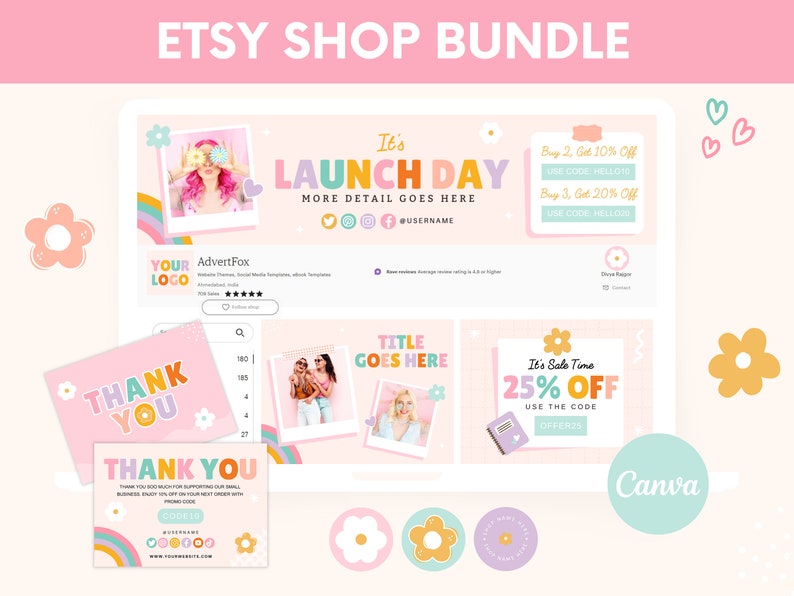
The fix: reduce uncertainty, don’t add hype
Etsy buyers respond to confidence, not shouting.
Practical fixes:
- clearer first image
- “what you receive” section
- multiple mockups
- simple FAQ line (“colors may vary,” “digital download,” etc.)
- consistent style across your shop
You’re not trying to sell harder. You’re trying to make buying feel safe.
Here’s a phrase that’s worth remembering: A purchase is an anxiety-to-confidence conversion.
When your listing answers questions, it converts.
When it creates questions, it doesn’t.
A quick “trust gap audit” you can do in 5 minutes
Open your listing and ask:
- Do I understand what this is in 2 seconds?
- Do I see exactly what I’m getting?
- Do the visuals match the vibe in the title?
- Can I imagine using it without confusion?
- Does the shop feel coherent if I click your profile?
If any answer is “no,” that’s your gap.
Fixing one gap often boosts conversion immediately—because you’re removing the exact hesitation buyers were stuck on.
Where Sale Samurai fits
If you’re getting clicks but no sales, Sale Samurai can help confirm:
- are you using the phrases buyers expect?
- does your listing match the aesthetic they searched?
- are you attracting the right audience?
But the main fix is still human: clarity + coherence + context.
Tools can help you validate demand and language, but they can’t replace the simple buyer experience:
“I know what this is, I know what I get, and I trust this shop.”
That’s the real conversion formula.
Final thought
Clicks are curiosity. Sales are trust.
Close the trust gap, and your existing traffic becomes worth more.
And that’s the best kind of growth: you don’t need to hustle for more views—you just make the views you already have feel safe enough to become customers.
- Why Buyers Abandon Cart on Etsy (And How to Fix It)
- The Photo Story: Mockups That Feel Like Real Life (Not Floating PDFs)
- The “Set of 3” Spell: Why Triptychs Convert in Printable Wall Art
- The “Room” Strategy: Selling by Space (Kitchen, Nursery, Office, Classroom)

- Why Some Listings Get Clicks but No Sales: The Trust Gap Problem