
There’s a specific moment every printable seller has watched happen (sometimes in slow motion): a listing gets clicks, gets favorites, maybe even gets added to cart… and then nothing. No sale. Just drift.
A lot of the time, that’s not a pricing problem or a keyword problem. It’s a belief problem.
The buyer likes what you made, but they’re not fully convinced it will work in their real life.
Because a printable isn’t really a “file” purchase. It’s an outcome purchase. People don’t buy PDFs for the joy of owning PDFs. They buy them because they want a wall to look finished, a party to feel coordinated, a kid to stay occupied, or a home to feel calmer.
And that’s why “floating PDFs” so often underperform. A floating PDF tells the buyer what the product is, but it doesn’t show what the product does.
A photo story does.
A photo story is a set of images that gently walks the buyer from curiosity to confidence. It answers the questions they’re already asking in their head, in the order they’re asking them, without making them work for it.
Why “floating PDFs” feel risky (even when they’re clean)
A single clean preview on a white background can look professional… but it can also feel like homework. It asks the buyer to do all the imagination:
- “How will this look in my space?”
- “Is this the right size?”
- “Will it be readable?”
- “What does ‘instant download’ actually mean here?”
- “Am I getting one page or twenty?”
When buyers have to imagine too much, they hesitate. When they hesitate, they scroll.
The solution isn’t to make your listing busier. The solution is to make it more human.
What a “photo story” actually is
Think of your listing images like a short, silent movie:
- The opening shot tells me instantly what this is.
- The next shot shows me where it lives in real life.
- The next shot shows me details up close so I can trust quality/readability.
- The next shot makes the deliverable obvious—what files, what sizes, what I’m receiving.
- The last shot reassures me: “This is easy. You’re safe.”
That’s it. Not a million images. Just a sequence that moves the buyer forward.
And the magic is: once you build this pattern, you can reuse it across your shop so everything feels cohesive and “real.”
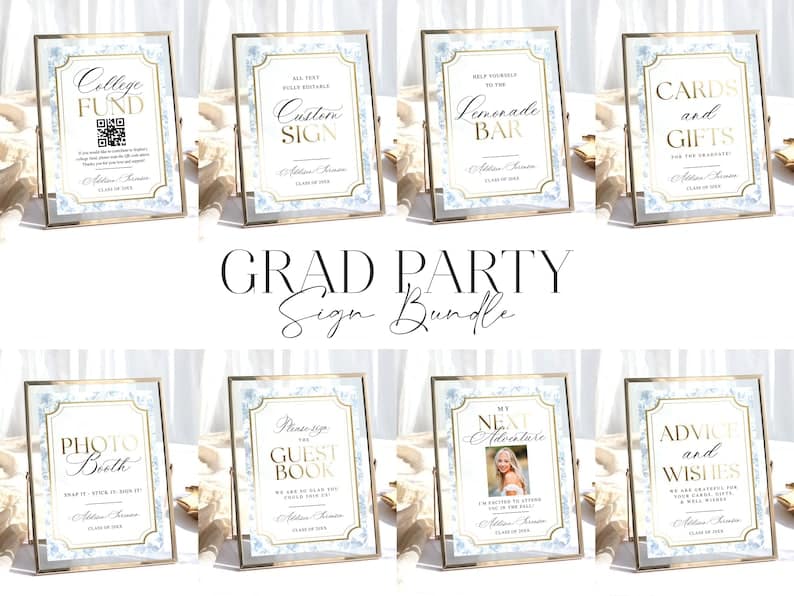
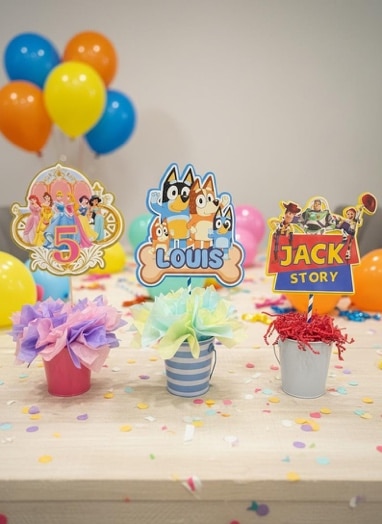
Real-life mockups that convert aren’t perfect — they’re believable
A lot of sellers think the goal is to make the product look as ideal as possible. But on Etsy, the better goal is believability.
Believability comes from tiny, almost invisible signals:
- a real frame edge
- a little shadow on the paper
- a clipboard clip
- a slightly angled perspective
- a hand holding the print
- a corner of a table or a countertop
Those tiny “real world” clues tell the buyer: This is what it will actually feel like when it exists.
And that reduces the biggest buyer fear: “What if I buy it and it disappoints me?”
L 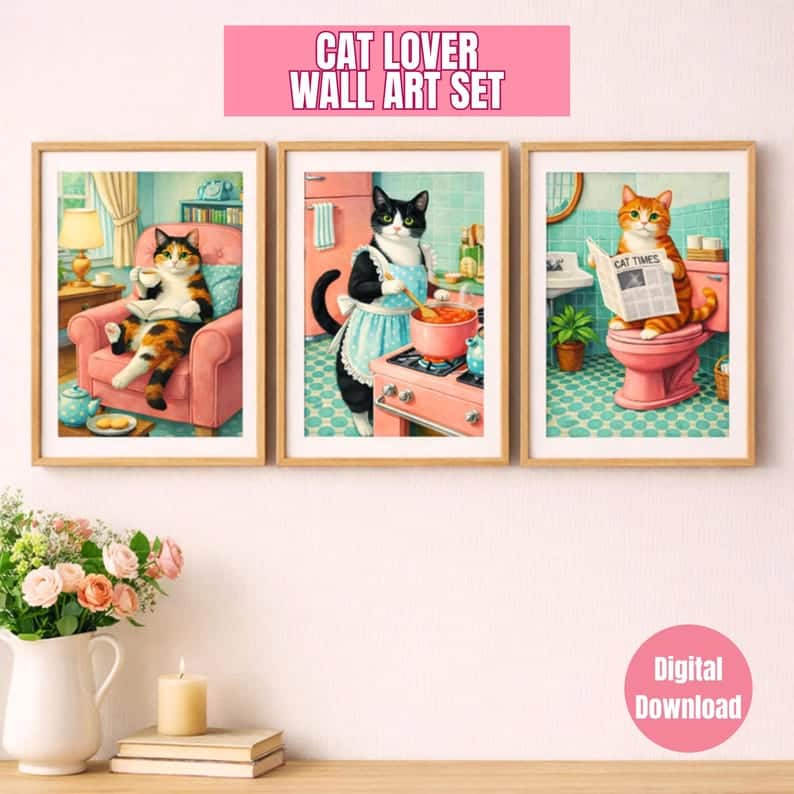
Let’s use fresh examples
Here are a few printable categories where the photo story approach is especially powerful — and easy to demonstrate with mockups that feel like real life:
1) Bathroom humor + bathroom decor sets
Bathroom printables are a classic Etsy win because they’re playful and instantly “placeable.” But they need context to sell the joke and the vibe.
A good photo story here shows:
- the set of 3 together (so it feels intentional)
- a framed mockup over a towel rack or above a toilet
- a close-up of typography so buyers know it’s readable
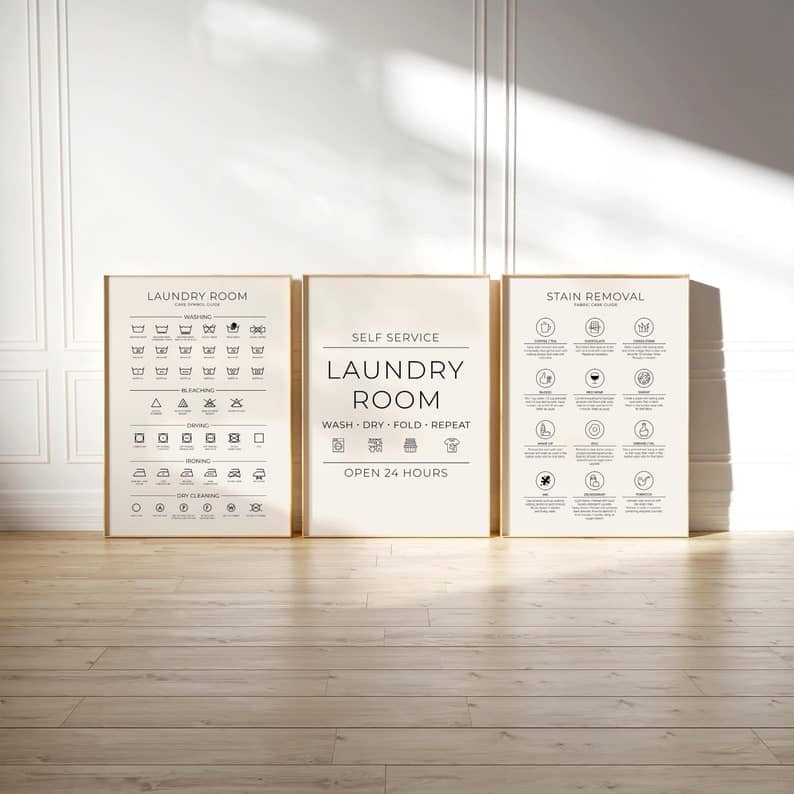
2) Laundry room “routine relief” prints
Laundry room printables sell because they turn an annoying chore into a vibe. But on a white background, they can look like generic quotes.
A photo story makes it real by showing:
- the print on a wall near baskets/shelves
- how it looks in a small space
- what’s included if it’s a set
3) Party ecosystems (birthday / baby shower / graduation)
Events are where buyers are most anxious and most ready to spend—if you make it easy.
A strong photo story shows:
- the whole pack laid out (invites, signs, games, labels)
- one “hero” mockup (welcome sign on an easel)
- a “what you get” card that kills confusion instantly
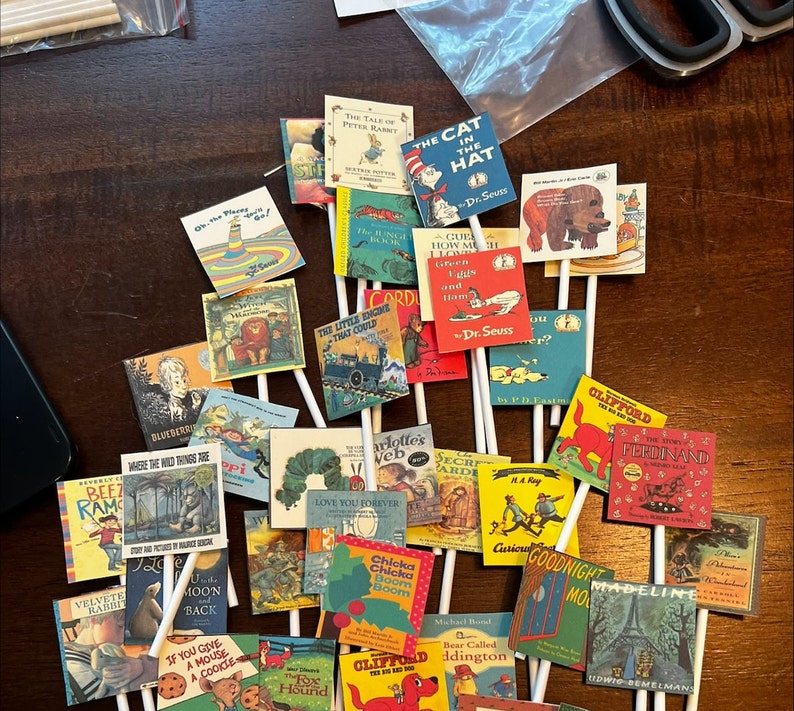
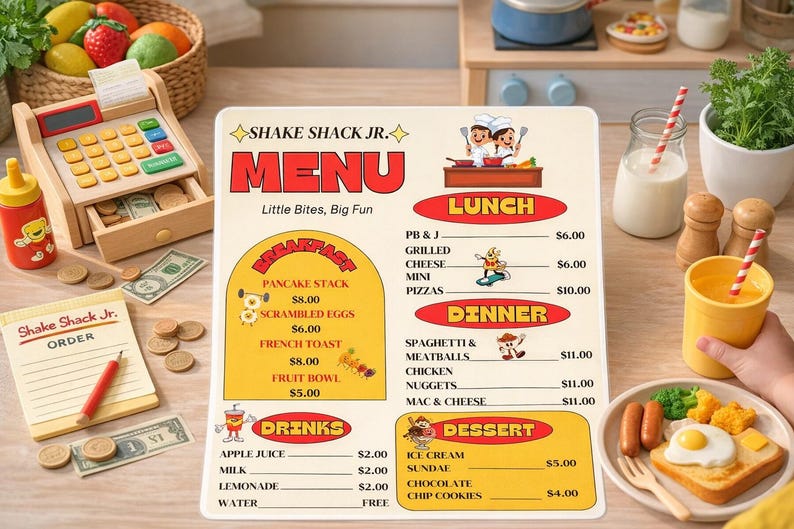
4) Kids activity packs (road trip / restaurant / rainy day)
Parents buy these because they need peace fast. Your photos should show “this will actually work.”
A photo story here should include:
- a collage preview of the pages
- one page in use (crayon on the table, clipboard in a car seat context)
- clear “pages included” and age range notes
5) Wedding signage suites (welcome sign + bar menu + seating)
Wedding buyers are buying coordination. They don’t want one sign—they want the whole look.
A photo story shows:
- the matching set together
- each sign styled in a believable venue-like setting
- a clean list of editable sizes and formats (because wedding buyers ask a lot of questions)
The single best conversion image: the “What You Get” card
If you add only one thing to a listing that currently relies on floating PDFs, make it this.
A simple graphic that says:
- number of files/pages
- included sizes
- file formats
- printing notes (“print at home or at a print shop”)
It’s not glamorous, but it’s a trust engine. It reduces refunds, messages, and cart abandonment.
Buyers don’t bail because they hate your design. They bail because they’re unsure. This removes “unsure.”
A simple photo story sequence you can reuse shop-wide
Here’s the template that keeps your listing from feeling like a document dump:
- Image 1: clean hero preview (readable instantly)
- Image 2: lifestyle context (the room or moment where it lives)
- Image 3: close-up detail (texture/readability)
- Image 4: “what you get” card (files/sizes/formats)
- Image 5: second context shot (alternate angle or use-case)
- Image 6: FAQ/trust note (digital download reminder, printing notes, etc.)
It’s enough to tell the story without overwhelming.
Where Sale Samurai fits
This isn’t about being technical—it’s about matching visuals to what buyers are already searching for.
If buyers search “bathroom wall art set of 3,” your first image should clearly show a set of 3.
If buyers search “graduation party printable pack,” your images should clearly show the pack and what’s included.
Sale Samurai helps you sanity-check the language buyers use, and then your mockups make that language real.
When search terms and visuals match, trust rises. When trust rises, conversion rises.
Final thought
A printable that sells well isn’t just a good file. It’s a believable promise.
A photo story turns your listing from “here’s a PDF” into “here’s what your life will look like with this.”
And when buyers can see that future clearly, they buy.